My Education
Education gave me the freedom to be curious.
I have been fortunate to receive an education that changed the direction of my life. It gave me knowledge, of course, but more importantly it taught me to question, to imagine and to keep learning.
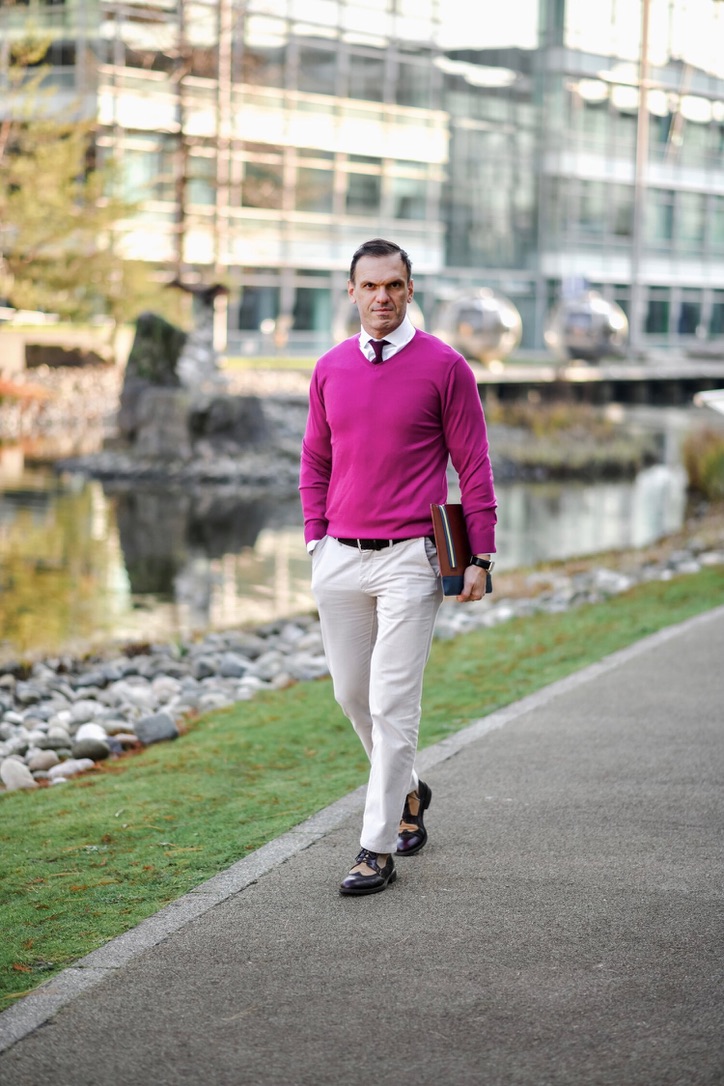
Long before physics, there were stories.
I grew up surrounded by the Greek language, culture and history. As a child, I was captivated by the myths of Achilles, Prometheus, Hercules and the many other figures who seemed to inhabit a world somewhere between history and imagination.
Looking back, I think those stories did something important. They encouraged me to imagine worlds beyond the one immediately in front of me. They gave me a sense of curiosity that stayed with me long after childhood.
School gradually gave that curiosity a more structured form. I discovered mathematics and physics: subjects that were difficult enough to be interesting and precise enough to make the world feel, at least sometimes, understandable.
Aristotle University of Thessaloniki
Physics became more than a subject.
My interest in physics and mathematics led me to study Physics at Aristotle University of Thessaloniki. It was there that I began to understand the scale and depth of the subject I had chosen.
During my first year, I found the area that would shape the next chapter of my life: subatomic physics. Quantum mechanics and particle physics fascinated me. The mathematics could be demanding and the ideas often counter-intuitive, but that was precisely what drew me in.
At the same time, I was learning outside the formal curriculum. I developed my English, Spanish and French and began learning to code. Programming was still an unusual skill among many physics students around me, but it would later become central to both my research and my work in technology.
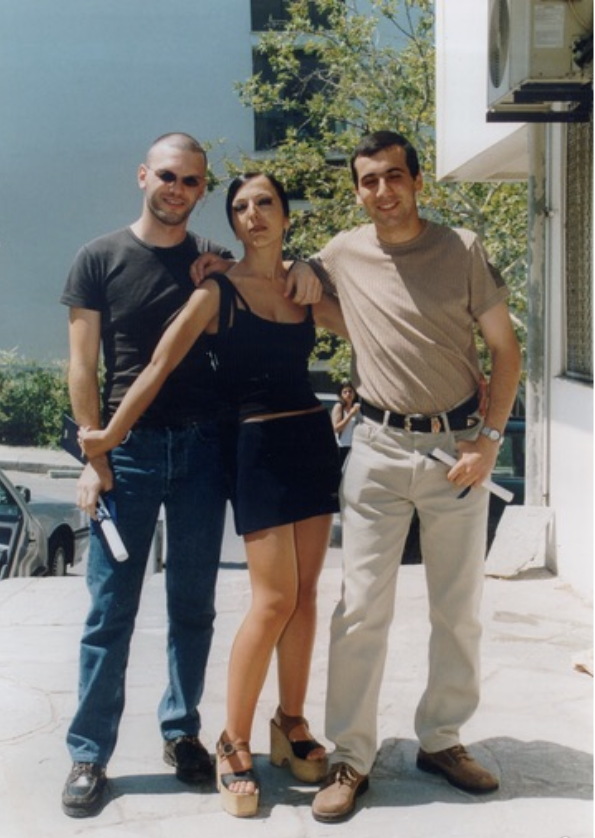
Particle Physics · Athens · CERN
Then the abstract became real.
I had the opportunity to join a research team working on the ATLAS experiment at CERN. Suddenly, the particles and theories I had encountered in textbooks were connected to one of the world’s most ambitious scientific collaborations.
I continued into a Master’s degree in Particle Physics at the National and Kapodistrian University of Athens. My studies moved between theory, computation and experiment, including quantum electrodynamics and computational physics.
This period changed my understanding of science. Physics was no longer simply about solving elegant problems on paper. It was collaborative, international and deeply human. Progress depended on people with different skills working on small parts of an extraordinarily complicated whole.

University College London
My PhD changed the way I approached difficult problems.
My work in Athens opened the door to a PhD in High Energy Physics at University College London. I was fortunate to work alongside exceptional researchers and mentors in an environment where difficult questions were part of everyday life.
Doctoral research is a peculiar kind of education. For long periods, you are working on problems for which the answer is not sitting at the back of a textbook. You learn to be wrong, to revise your assumptions and to keep going when a result refuses to behave as expected.
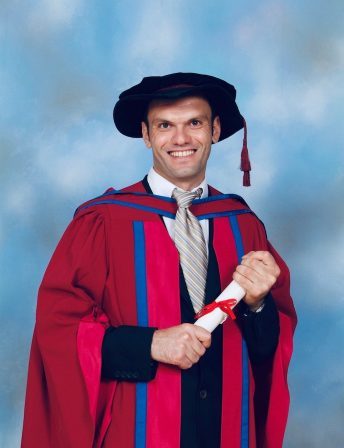
After three intense years, I completed my PhD. My thesis received UCL’s Best PhD Thesis award — an honour of which I remain deeply proud.
Opportunity and support
No educational journey happens entirely alone.
I am very conscious that my academic journey was made possible not only by work and ambition, but by people and institutions that chose to support me.
My research received support from the High Energy Physics Group, the Department of Physics and Astronomy and the Central Laboratory of the Research Councils. I was also honoured to receive a scholarship from the Alexander S. Onassis Public Benefit Foundation.
That support mattered enormously, both to me and to my family. It is one reason I continue to believe so strongly in education as a force for opportunity and social mobility. Talent matters. Hard work matters. But access to the right opportunities can change the entire trajectory of a life.
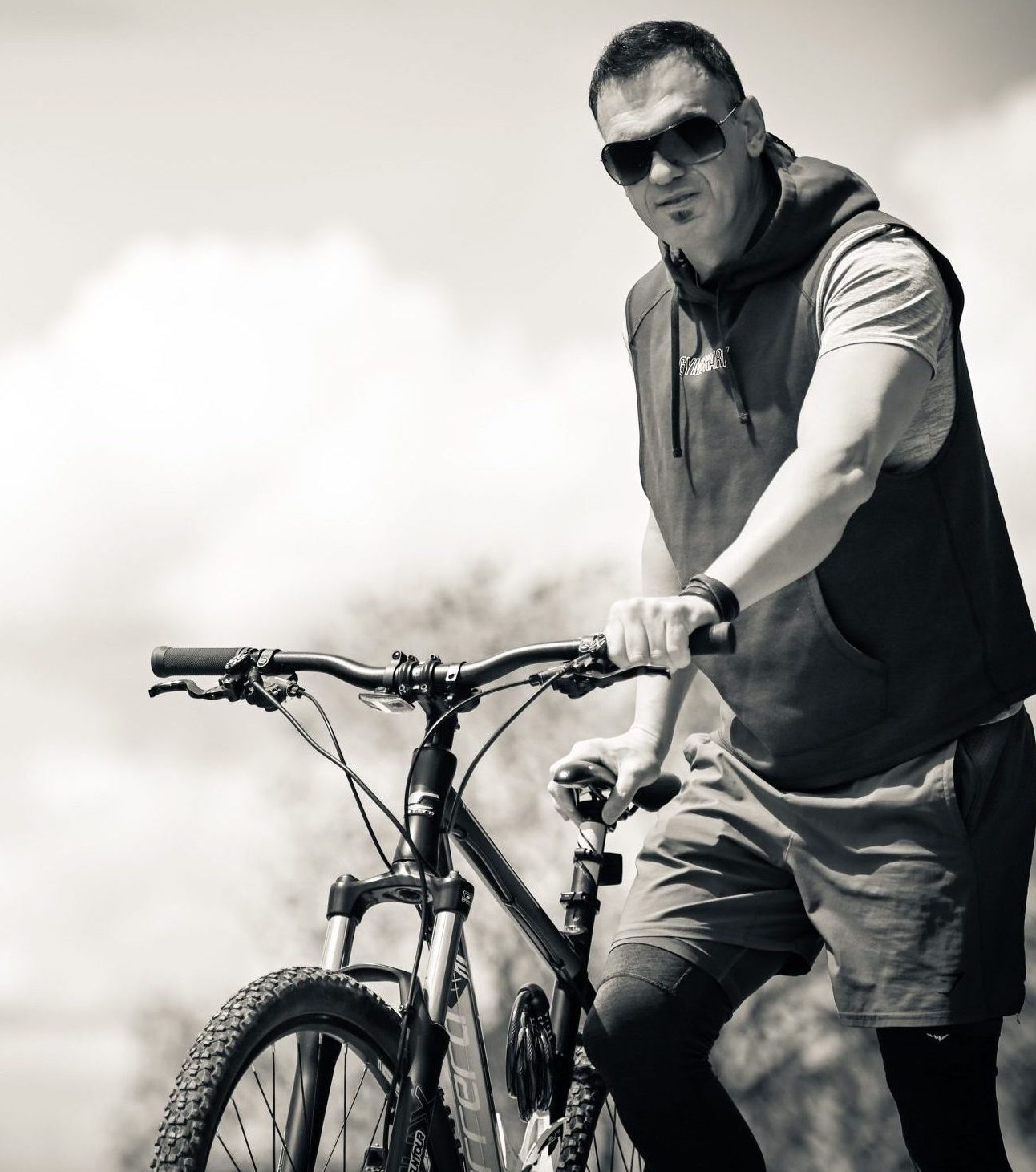
“The places in the Universe I liked the most, were the places I discovered myself.”
— Unknown
Completing my PhD was an ending. It was also permission to begin again.
After years of formal study and research, I reached a point where I wanted a different kind of challenge. I loved physics, and I still do, but I was increasingly curious about the world beyond academia.
So I stepped into it.
What followed was a career that took me through international consultancy, education, technology and entrepreneurship. The route was not linear, but the habits I developed through my education — curiosity, analytical thinking and a willingness to tackle unfamiliar problems — travelled with me.